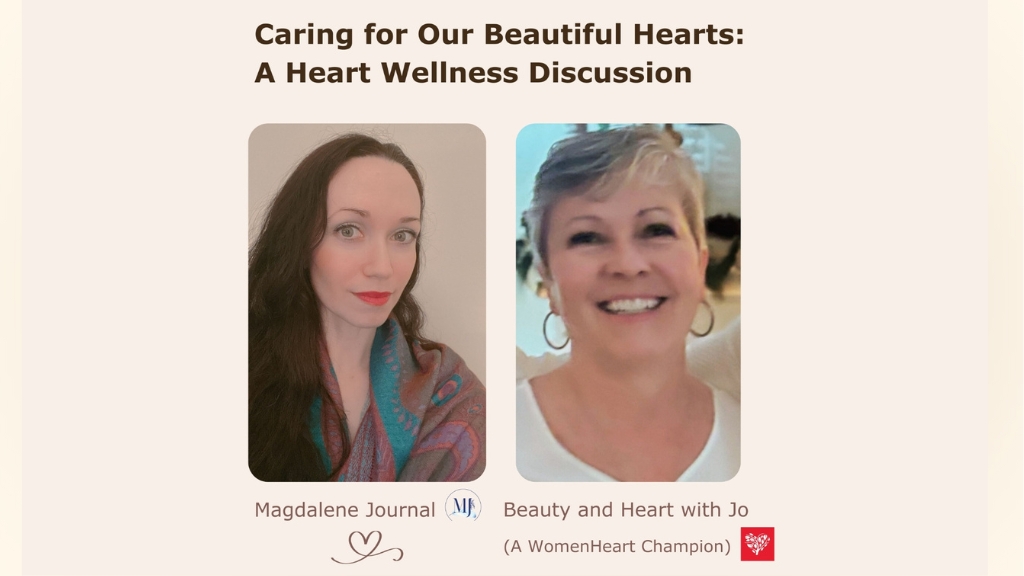
Caring for Our Beautiful Hearts – A Women’s Heart Health Discussion: Podcast

Season 2 Episode 1. Welcome to the Magdalene Journal Podcast, where we explore wellness, creativity, and inspiration. In this episode, Jo of “Beauty and Heart with Jo” joins us for a wellness discussion focused on women’s heart health. Jo shares the story of her personal heart health journey and how this experience led her to become a WomenHeart Champion: an advocate for women living with heart disease. You’ll learn why heart health education matters for everyone, how women’s symptoms can present differently, and how stress reduction, self-advocacy, and compassionate self-care can all play a powerful role in prevention and healing.

Resources mentioned in this episode:

WomenHeart links shared here with much gratitude for the essential work of the WomenHeart community and their ongoing advocacy for women’s heart health.

WomenHeart: https://www.womenheart.org

SisterMatch Program: https://www.womenheart.org/sistermatch/

Follow Jo on social media: Beauty and Heart with Jo

https://www.instagram.com/beauty_and_heart_with_jo

Discover more about Magdalene Journal at https://magdalenejournal.com/

Produced by Magdalene Journal and Beauty and Heart with Jo, with additional production support from Mind Body Voice Productions. (https://mindbodyvoiceproductions.com/)

This episode is intended for informational purposes only and does not constitute medical advice. The views expressed are not a substitute for professional medical care. Please consult your physician or qualified healthcare provider before making any health-related decisions.

Listen to this episode on Apple Podcasts, Spotify, or YouTube at these links – Apple: https://podcasts.apple.com/us/podcast/caring-for-our-beautiful-hearts-a-womens-heart/id1844102114?i=1000744329935 Spotify: LINK COMING SOON or YouTube: LINK COMING SOON

(Note: This page includes the full transcript of the episode below. An informative disclaimer appears again at the end of the transcript.)

Transcript:

Erica Magdalene, Host:

Hi, everyone. Please note that this episode is intended for informational purposes only and does not constitute health or medical advice. Neither I nor my guest are medical doctors and we are not teaching you how to manage your health. Please consult your physician or a qualified health care provider before making any medical or health-related decisions.

Welcome to the Magdalene Journal podcast. So as part of Magdalene Journal’s focus on wellness, today we’re talking about women’s heart health and caring for our bodies. So today, I’m going to be speaking with someone who is very special to me: Jo, of Beauty and Heart with Jo. She’s a WomenHeart Champion, a women’s heart health advocate, and she’s also my aunt! Which makes this conversation extra meaningful. Jo, thank you so much for being here with me today.

Jo:
Thank you Erica, thank you so much for having me. I’m really happy to be here.

Erica:
Oh, I’m so happy you’re here too! So if you could tell us a little bit more about your advocacy in this area and what that means to you, especially heart health specific to women?

Jo:
Yes, Women Heart is the National Coalition for Women Living with or at Risk of Heart Disease. It has been around for over 20 years. And as WomenHeart Champions, and as you mentioned, all Women Heart champions are women living with heart disease. We’ve all gone through an extensive training through the Mayo Clinic that helps us learn how to share our stories.

And the three areas that I often think of is SEAC. So we support, educate, and advocate for women. And the three different areas: support is where we have Women Heart support groups throughout the whole country. There’s over a thousand Women Heart champions right now. So we support. We go into hospitals when women have experienced a heart attack or surgery. And we offer them comfort and support.

We also offer red bags of courage, which are just filled with so much great information and where and how to get support. And then education is where we go out into the neighborhoods and offer workshops and speak at different seminars, and it’s all volunteer work.

And then advocacy I’m very passionate about, which is where we go and advocate for women’s heart health and needs that are specific for women’s health. And so that wraps it up. Once a year we go to Advocacy Day in Washington, D.C., which is so exciting, and really speak to members of Congress and try to get support for more funding specific to women’s health.

Erica:
That’s incredible. It touches so many levels of connection with women, where, as you were saying, whether it’s one-to-one with women who are in the hospital going through such an overwhelming experience, and then reaching out on that advocacy level, reaching lawmakers and decision-makers to really support us in this area. That’s incredible.

And I wanted to also ask you as well if you’d like to kind of touch on some of your own personal experience with heart disease and what, you know, how that led you into this area of advocacy?

Jo:
Yes, well, learning to live with heart disease was the first part of my journey. And then heart disease gave me a purpose at how to help others and share this information. And Women Heart gave me the platform in which to share everything that I’ve learned on this journey.

My own story came about almost eight years ago now. And I thought of myself as the picture of health until I was at my nephew’s wedding, your cousin’s wedding, and just didn’t feel right the whole day. And the first thought, oh, maybe it’s nerves.

Making the first big mistake of driving myself to the hospital, et cetera, et cetera. I was diagnosed with a SCAD heart attack. SCAD stands for spontaneous coronary artery dissection. Now, that’s a mouthful.

Erica:
Whoa.

Jo:
And I’ve learned an awful lot. And it’s a type of heart attack that primarily does affect women and usually younger women. So that made me feel a little better. At least I was in with the young women. At that time I was 55 years old.

And after being misdiagnosed a few times and having problems with the wrong dosage of medications, I finally got it straightened out. And now I’m happy to say I’m not only living with heart disease, but I would say thriving.

Erica:
That’s excellent. That is wonderful to hear. And I definitely just want to say I’m so grateful that you’re doing well and that you’re thriving, because it is a very scary and very concerning thing to go through for sure.

And on that note, too, as you were describing, you know, being at this wedding, this family wedding, and having these feelings come over to you, that really made me think about how women’s symptoms do tend to manifest differently from men’s symptoms. And can you speak to that a little bit of what women in particular should look out for?

Jo:
Yes, definitely. In my own case, it wasn’t that Hollywood crushing pain that you see, you know, clenching your chest. I just had a feeling of discomfort, almost like an impending sense of doom, a tightness, and a pressure in my chest. And then a shortness of breath began to kick in.

And that’s when I thought, hmm, I’ve got to get this taken care of. So I caution women not to try to think it away. Know your body. You know when something’s not right. So trust in your instincts and get things checked out.

Erica:
Absolutely. Yes, I think that’s a huge part of it, learning and researching about how symptoms can manifest differently. And also what you spoke to earlier about something that I think a lot of women are socialized to do of like, well, I don’t want to be a bother. It’ll be fine. We’ll put this to the side.

And would you say that is a huge part of our wellness too, of being self-aware and speaking up and like you said following our intuition if something doesn’t feel right?

Jo:
Exactly, exactly. So many times we just don’t want to make a scene, don’t want to look foolish. And there’s being told, you know, you’re probably just stressed or you’re probably having anxiety. If you know your body, you have to be persistent until you get the diagnosis that is correct.

Erica:
Absolutely. Absolutely. And as kind of as you were mentioning before, too, about how you said something to the effect of you felt like you’re the picture of health and everything is fine. What would you say to some women who do feel similarly like, well, I, you know, I think I’m doing great. I haven’t, you know, come across any issues. How and why should we be aware and proactive about our heart health?

Jo:
Because so many variables are involved. In my case, I have, or we have, I’m sorry to tell you, it’s family history. I wasn’t aware of how strong it was throughout our family, family history of heart disease, particularly on women’s sides.

And also stress. SCAD, in my case, was a stress-induced problem. And I always thought, oh, so, you know, everything’s cool. Everything’s fine. But stress will manifest itself someplace. And I think of stress as it can find your Achilles heel or your weak spot. And in my case, it was my heart.

So through all of this diagnosis, I found I also have coronary spasms, also known as Prinzmetal’s angina. It is a form of angina or chest pain that can come on at rest. A lot of people think of angina as when you’re out shoveling the snow and you get that heart attack. What I’m prone to happens at rest.

So what can induce, cause that is stressful situations. And although you might rally during this stressful situation, it sometimes shows itself after the fact. So please, my message to everyone out there is two words I hope we never use together is just stress. So often we say, oh, she’s just stressed. Absolutely. It’s a word that disqualifies what you’re really feeling. And stress can be a killer. Manage your stress.

Erica:
I think that’s such an important point of a word like just where it’s minimizing. And I think we do in society tend to minimize our stress and try to push harder and value this idea of pushing ourselves to burnout sometimes. And it’s not worth it. And we do not want to go there on a personal level, too.

I also am really grateful for your openness and transparency because I just think knowing is, sounds a little frightening, but it’s the fact is heart disease is the number one killer of women and men in America, the number one killer. But the good news when you hear that it’s like, oh, that’s frightening. But the good news is it’s 80 percent preventable. That’s huge.

Eighty percent, that is incredible. Would you say some of the ways of prevention, you definitely mentioned the reduction of stress, which is very essential. Are there other areas in terms of, I guess, like what we’re consuming, like food or, you know, any other areas of our life that contribute to that?

Jo:
Definitely. And although the family history that we have no control over, but the other like 80 percent, whether it be finding a diet that’s best for you, and that’s a realistic diet, not that we’re going to New Year’s resolution, let’s do everything at once.

But a realistic lifestyle changes that whether it’s just walking a few minutes each day and each day increasing your healthy eating habits and finding something that you enjoy doing and you can stick with it.

Erica:
And then also I was wondering too, because the stress being such a huge part of it in your learnings and research and advocacy work, are there some specific tips you have so that we can live a more stress-free lifestyle?

Jo:
Yes, so many things. And it’s really honestly been a process, learning how to minimize stress, manage stress, and most importantly, knowing your triggers and being respectful to your triggers and honoring yourself in saying, if this is an overwhelming situation for me, I have to manage walking away from it and what I can do in face of it.

And not feeling, this is a big one, not feeling that you have to explain yourself to everyone else. You have to be responsible for your own wellness and self-care.

Erica:
Absolutely. Much easier said than done.

Jo:
Exactly.

Erica:
No, that’s so important. And I think that kind of goes back to what we were talking about earlier, especially in regard to women and how we tend to express ourselves. We tend to not want to be the one to kind of speak up for ourselves always or want to intrude or think we’re making a bother or a fuss.

And I think when it comes to even interpersonal moments, if we’re in a situation, even if it’s with family, things can be stressful. If it’s a stressful conversation or a moment, you just have to take a minute, right? And just give yourself that space.

Jo:
Yes. I had, after the heart attack, I had a wonderful cardiac counselor because it was so overwhelming at first. Honestly, I could count the amount of times I’ve even had a cold.

So to suddenly be faced with this and then hear, oh, you’ve just had a SCAD heart attack, you have angina. Oh, and just for a little extra flavor, an aortic aneurysm. I was like, holy, holy, holy, this is a lot of news.

And then once I found this fabulous cardiac counselor, which through many insurance companies there’s a lot of different avenues of support that you can get if you just know about them.

And this one counselor told me, every day look at your hand, like make a little cup with your hand and think of it as that’s how much energy you’re filled with for the day. And if you choose to waste your energy on stressful situations or things you can’t control, you’re going to be down for the count for the rest of the day.

So I think of that often when I think of how to use my energy wisely each day.

Erica:
That is very wise. And it’s wonderful to have a visual that you can relate to and even a little gesture. Like I would imagine even if you’re just going about your day to kind of make that little, you know, hand cup movement and just remind yourself. That’s excellent.

There are so many resources that we have at hand to educate ourselves and be aware, like you were mentioning possibly reaching out to your medical provider or seeing if you have some kind of a counselor that can help you. What are some other resources that we can go to to learn more and educate ourselves?

Jo:
Well, with your cardiologist or whoever primary care doctor you’re speaking with, be sure that you take the time to get the right answer, stay on target, and find a doctor that you’re comfortable with, that you have a rapport with.

Because I think once you have a good partnership with your physician, then you can work as a team. And then to me, in my case, I felt more empowered to manage the things that I can control, knowing that my cardiologist was helping with the things that he was empowered to control.

Erica:
Absolutely. That is so excellent, especially that reminder of having the space for the answers. I think when we do go to our appointments, it can be so overwhelming and so much to focus on. And even something like making sure you have your pen and your notepad or taking notes on your phone or whatever note-taking arena is easiest for you to remember to do that.

Jo:
Yes. Very often a lot of other Women Heart champions I’ve communicated with say they actually ask the physician if it’s okay that they record the conversation.

Erica:
Absolutely. That sounds wonderful. Then you take away that extra stress of, okay, let me make sure I’m writing this all down and getting it all in the moment.

And then are there any websites? Definitely, I would say, I’m sure that Women Heart would have a lot of good resources in terms of going there. And what type of, I guess, like online or social references can we look at, too?

Jo:
It’s womenheart.org. And through Women Heart, they can lead you to so many other organizations. And at Women Heart, you can find champions in every state throughout the country that can come and speak at different seminars and courses.

They have Women Heart YouTube TV, which has great information of different clinicians that have come to speak with us. Yes, so there’s so much information out there. So that would be my number one resource to get started with.

And we even have a program called Sister Match. As a woman living with coronary disease or any type of heart disease, you can find a Sister Match with either the same demographics, the same type of disease, the same age, whatever you have a comfortable connection would be. And then you have actually somebody that’s had the same lived experience. It’s extremely helpful.

Erica:
Similar to what you were mentioning earlier with the aspect of going to women in a hospital who’ve recently had this experience and then the follow-up after. So you can have that sisterhood aspect of staying in touch and having someone there with you on the journey.

Jo:
That’s awesome. It was so important because I was so blessed to have so much great family around me to support me. I’m so fortunate to have fabulous physicians. But there was like this missing piece. Like, wait a minute, what the heck just happened to me?

And then to speak to other women that went through the same thing. And I thought when I was so frightened in the hospital, if somebody would have walked in a few years out as I am now, looking great and strong and confident, I would have said, oh shoot, okay, I’ve got this.

The last thing I would say to everyone out there is your one takeaway is know your numbers. Know your blood pressure, your cholesterol, your blood sugar, and your BMI. And then just listen to your body.

Erica:
Nice, nice. And one more question on that note. What are some good checkup times that have your blood work? And I know the numbers, and I used to, I still do, get afraid of, oh, I’d rather not know. I know I always just rather, you know, buried my head in the sand. But knowledge is power. And as we said earlier, if it’s 80 percent preventable, if we know what’s going on, we can do our part to control it.

Jo:
Absolutely. Knowledge is power, one hundred percent. And we need to move into that awareness without the fear, with owning the knowledge, and then we do the best we can. And then we live better, healthier, stress-free lives that way. That’s the goal.

Erica:
Love it. On the note of resources as well, if folks want to follow what you’re up to and see what you’re offering and what you’re doing in this area, can you remind us of your social channels where folks can find you?

Jo:
Beauty and Heart with Jo on Instagram and Facebook.

Erica:
Thank you so much for doing the work that you do. It’s an incredible step to go from having an experience like you’ve described and surviving that and moving into a place of thriving and also continuing to hold that space to help others on the journey. I think that’s really excellent, and I’m very proud to be related to someone like you.

Jo:
Well, thank you. The feeling is mutual. I appreciate it. Thank you for having me.

Erica:
Thank you for listening.

Disclaimer: The content in this podcast and in this podcast episode is for informative purposes only. Erica Magdalene is not a doctor and neither is her guest Jo. This episode is intended for informational purposes only and does not constitute medical advice. The views expressed are not a substitute for professional medical care. Please consult your physician or qualified healthcare provider before making any health-related decisions.

Photo credit: Erica Magdalene via Canva
Making Creative Progress: Podcast

Season 1 Episode 2. Let’s talk about following through on our ideas! Making progress without pressure. With small doable action prompts to move you forward, especially helpful for neurodiverse and sensitive creatives. Feeling stuck or blocked on your creative project? This episode offers you a powerful reframe: what if your idea is meant for you — and you’re meant to follow through? I talk about overcoming fear, staying accountable without external deadlines, and embracing imperfect action. Plus, you’ll hear inspiration from The Artist’s Way, and explore a simple challenge: to take two small steps today toward achieving your vision.

Take care,
Erica Magdalene

Listen to this episode on Apple Podcasts, Spotify, or YouTube at these links – Apple: https://podcasts.apple.com/us/podcast/making-creative-progress/id1844102114?i=1000735771176 Spotify: https://open.spotify.com/episode/4MTYcBL5GKOdQg19kayGZo or YouTube: LINK COMING SOON

(Note: This page includes the full transcript of the episode below. An informative and fair use disclaimer appears at the end of the transcript.)

Transcript:

Erica Magdalene, Host:

Hello.

It is Saturday morning where I am as I’m recording this. So happy Saturday if you’re listening on a Saturday, and hope you are having a happy day, whatever day you might happen to come across this.

Something that is intriguing me lately is really kind of looking into the idea of different types of channels and ways to share. And I’ve never really explored audio and podcasting. And so I’d like to try this out as a way to connect with you.

Something that’s on my mind lately is really following through creative accountability. It can be so—or any kind of entrepreneurship or whatever ideas you’re focusing on bringing into being—it can be so, so, so challenging to move forward with something when nobody is kind of telling you, “Hey, you really need to do this. You really need to get this done. Have you done it yet?” Or, you know what I mean?

Maybe you do have people who are encouraging you, but it’s a little bit different than, say, showing up to work or showing up to school where things are baked in and time-bound in a very regimented way, where folks are watching you and everybody’s like, okay, you really need to make those deadlines and deliver.

And it’s a little tougher in the creative space where you’re really kind of holding yourself accountable. And there’s also very obviously space too for not everything that you’re creating has to be regimented and time-bound and focused in this way. So much of the creative space is really opening into that magical area where things are just flowing through, and you don’t necessarily have to create something because you need to share it with everyone. It’s just literally part of who we are. It’s just so natural and intrinsic to us to be creators, right?

But I’m talking about things that you do want to produce, and you do want to share with people, and you do want to get your ideas out there. And so I’m kind of focused on that this morning.

If I can do it, you can do it. If I can create this little message for you, put it out there—it’s so, so scary for me. I feel nervous. I feel scared.

But I’m kind of following the ethos of—and there’s even a book by this title—Do It Scared. Put it out there. Follow through.

So consider this my friendly encouragement to you: if you have an idea or a concept that you want to get out there, do it this weekend. Really follow through. What is the next step that you can create and make happen for yourself?

I’m opening up The Artist’s Way book. I’m pulling out a totally random section. Okay, I just randomly opened it to page 49.

And in here, Julia Cameron is saying:

“As blocked creatives, we are willing to go to almost any lengths to remain blocked.”

I’m skipping ahead a little bit.

She also says:

“Very often we fear that if we let ourselves be creative, we will become crazy makers ourselves.”

And she goes on to say:

“The next time you catch yourself saying or thinking, ‘He or she is driving me crazy,’ ask yourself what creative work you are trying to block by your involvement.”

So I think that does relate to what I’m talking about—just putting yourselves out there. If you feel like something is blocked, is it really? Or is it an aspect of fear, an aspect of “I really kind of need to not put my work out there, and I need to find any situation to not do so.”

So I’m kind of going to jump ahead. I’m going to find another little random moment. Okay—page 156.

She says:

“A successful creative career is always built on successful creative failures. The trick is to survive them. It helps to remember that even our most illustrious artists have taken creative U-turns in their time.”

So that really speaks to me. And one of my favorite things to kind of say to myself is—kind of like that episode of Friends where they’re moving the furniture and it’s like, “Pivot, pivot.”

So at a certain point, if you’re just too down in the depths of “Is this working out or is it not working out?” you can literally pivot in terms of your idea. You can say, okay, I’m going to work on something totally different.

Or you can maybe pivot in your own mind and say, okay, I really respect the part of my mind that is afraid, overwhelmed, or somebody told me I couldn’t do it so I think I can’t do it.

What if you gently pivot into a more supportive mindset where you say to yourself, you know what—if I am filled with this idea that this is something I want to create and do and share with folks, it’s there for a reason. What if you kind of open up your mindset to this is meant for me. This is something that I’m meant to share with the world. This is something that I’m meant to do to inspire and encourage other people, and really fulfill that part of yourself that knows that this is meant for you.

So those are some thoughts to hopefully help motivate you to go out there.

And as one of my early meditation teachers once told me: what if you try at least two things today? Are there at least two things that can move you forward? Any two actions—pick two actions today to move your idea a little closer into being.

So I hope you have a beautiful, wonderful day.

All the best.
Take care.

Disclaimer: The content in this podcast and in this podcast episode is for informative purposes only. Podcast creator and host Erica Magdalene is not a doctor, therapist, or licensed mental health professional. Any discussion of neurodiversity, mental health, or personal growth reflects personal experience, is not health or medical advice, and is not a substitute for professional care.

Portions of this episode may include brief quotations from published works, shared under fair use for the purposes of reflection, discussion, and education.

Photo credit: Erica Magdalene via Canva
Welcome to Magdalene Journal: Podcast

Season 1 Episode 1. Welcome to the very first episode of the Magdalene Journal podcast! In this short introduction, I share why I started Magdalene Journal, what it offers, and how this new podcast will explore creativity, healing, neurodivergence, and inspiration through audio and conversation. Future episodes will feature reflections, stories, and inspiring guests to spark your own creative journey!

Take care,
Erica Magdalene

Listen to this episode on Apple Podcasts, Spotify, or YouTube at these links – Apple: https://podcasts.apple.com/us/podcast/welcome-to-magdalene-journal/id1844102114?i=1000730115464 Spotify: https://open.spotify.com/episode/2eQjhgdlqc9V85BbssSuJc or YouTube: LINK COMING SOON

(Note: This page includes the full transcript of the episode below. An informative disclaimer appears at the end of the transcript.)

Transcript:

Erica Magdalene, Host:

Hi, and welcome to the Magdalene Journal Podcast!

I’m so glad you’re here. My name is Erica Magdalene, and I started Magdalene Journal to really be a creative home, a space to explore beauty, meaning, healing, and inspirations across art, nature, spirit, and personal growth.

And I want to continue growing this community and this space now in this audio and visual format. So I want to continue having this opportunity to provide uplifting encouragement, honor all of our journeys—especially the nonlinear, intuitive journeys many of us are on, especially those of us who are neurodivergent, sensitive, and all of us who are seeking something deeper.

So I’m really looking forward to connecting with you through this new path—through sound, through story, through conversations. And as part of that, I’m looking forward to offering event recaps, interviews with wonderful people, and creative encouragement, always with the hope of offering something meaningful for your heart, your mind, and your creative soul.

So whether you’re an artist, a healer, a deep thinker, or someone who wants to reconnect with your own inspiration, this is our space.

Thank you so much for being here with me, and I’m so thrilled to see where this journey takes us.

Take care, and lots of love.

Disclaimer: The content in this podcast and in this podcast episode is for informative purposes only. Podcast creator and host Erica Magdalene is not a doctor, therapist, or licensed mental health professional. Any discussion of neurodiversity, mental health, or personal growth reflects personal experience, is not health or medical advice, and is not a substitute for professional care.

Photo credit: Erica Magdalene via Canva
Creative Motivation – Accountability and Following Through With Your Ideas

Hey folks! I’ve had creative accountability on my mind. One of the most challenging parts of being a creator, or of almost any endeavor, I believe, can be following through on your inspirations and sharing your ideas in some format with others. I created this audio file today if you need an extra nudge to motivate you to put your ideas out there! And one quick takeaway here from the audio – as one of my teachers once shared with me, what are two doable actions you can take today to move your idea forward?

I’m excited to explore audio as a format – I’m hoping to keep it going and add a Magdalene Journal podcast to our community! Please feel free to comment below or reach out to me here, and let me know if you find this helpful, and what topics you might like to hear about next. ❤️

Take care,
Erica Magdalene

Photo credit: Erica Magdalene

Happy Thanksgiving

This Thanksgiving, I am so grateful for all of you, and wish you a beautiful and peaceful day. Your presence in our spiritual and creative haven is a source of inspiration!

As we cherish the blessings in our lives, let’s also extend our love to those who may be feeling a sense of loneliness on this day. Kindness is immensely powerful and transformative. Remember that your gestures are important and valuable, and have the power to illuminate someone’s day and remind them that they are not alone. And you might be feeling lonely today, know that you are so important, loved and appreciated.

It’s so important to us to honor indigenous Native people on Thanksgiving as well – words falter in capturing the depth of respect and humility owed to the rich tapestry of both their heritage and their current presence and cultural contributions.

Let’s make this Thanksgiving a celebration of gratitude, not just for our own blessings, but for the opportunity to spread love and joy to others.

While reflecting on the spirit of kindness this Thanksgiving, I draw inspiration from the timeless words of St. Francis of Assisi’s prayer, a reminder of the transformative power of kindness and giving, and the connection it fosters with everyone around us:

Lord, make me an instrument of your peace:
where there is hatred, let me sow love;
where there is injury, pardon;
where there is doubt, faith;
where there is despair, hope;
where there is darkness, light;
where there is sadness, joy.
O divine Master, grant that I may not so much seek
to be consoled as to console,
to be understood as to understand,
to be loved as to love.
For it is in giving that we receive,
it is in pardoning that we are pardoned,
and it is in dying that we are born to eternal life.

With love and blessings!
Erica Magdalene

Photo credit: Brian A. Jackson from Getty Images Pro

The Power of Rose Quartz – For Love, Compassion, and Emotional Healing

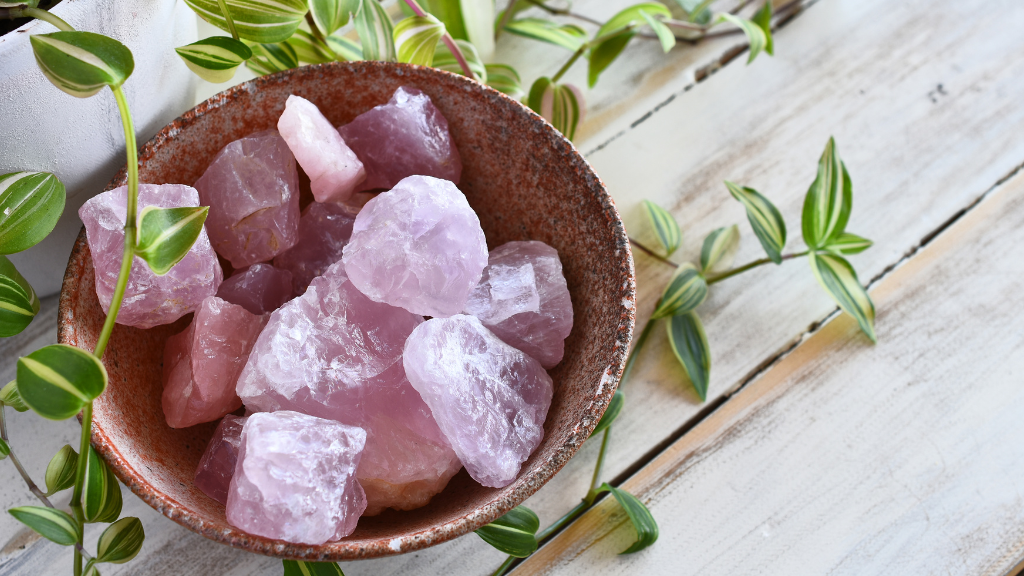
The lovely light-pink rose quartz is an excellent tool to assist you with attracting more love into your life. Its soft and clear pinkish-rose hue immediately makes one think of love. Rose quartz can balance and also open your heart chakra to assist you with loving yourself. Then as a bonus, besides the personal, intrinsic benefit of filling your being with positive and healing self-love, since “like attracts like,” even more love will become drawn to your loving radiance.

Energetic Healing

When you work with rose quartz with this intention, you are focused on your own energy. Ethically, you don’t have to worry that you are imposing your will on another. As another benefit, the focus on balancing your own heart chakra can bring healing and a greater sense of peace in other areas of your life.

A Loving Meditation

Try this meditation to open and balance your heart chakra. Get a piece of rose quartz. (It’s great to work with a rose quartz pendant, because you can wear the pendant later as a reminder that strengthens your intention.) If you wish, you can energetically cleanse the stone, and program it with your own intentions. (A brief walk-through of cleansing gemstones: you can connect with a higher power and set the intention that the method you use (such as wafting incense over the stone, chanting, etc.) will clear away old or unwanted energy. Keep in mind, some folks believe that gemstones are self-cleansing and do not need regular cleansing. Some stones are safe to cleanse with water, and some are not, so it is best to get clarity on that before using water if that resonates with you.)

Find a quiet place to relax. If you wish, you can hold the rose quartz in your left hand, as generally, the left hand is believed by some to be the receiving hand. (Of course, do whatever resonates with you as the most appropriate – trust your inner guidance.)

Get into a meditative state. Visualize the loving energy that comes straight from Source surging through the rose quartz, up through your arm and into your whole body. As your body is filled with this loving energy, bring the focus to your heart chakra. (You can then even place the rose quartz over your heart center if you wish.)

Finish your meditation, thank Source, and ground yourself. As you go about your day, carry the piece of rose quartz with you, or wear your pendant as a reminder close to your heart.
Do this meditation as often as you like. (Since rose quartz is associated with Venus, it might be nice to try this each Friday, a day also associated with Venus and love!) Keep in mind that this meditative exercise is simply a reminder of what is already within you. To paraphrase spiritual and self-help teacher Wayne Dyer, “You are love and you emanated from love.”

Rose quartz jewelry is also a beautiful way to keep your intentions close to your heart. It also makes a thoughtful and meaningful gift! Especially with Mother’s Day coming up soon, a rose quartz gemstone pendant necklace makes a truly special gift. Kendra Scott is known for dainty jewelry that is at once ethereal and classic. Check out her lovely rose quartz gemstone necklace here!

This article includes Amazon affiliate links for which we may receive a commission upon purchase. If this item speaks to you, your purchase helps support our creations at Magdalene Journal – thank you for your support!

Some paragraphs above are an adapted excerpt from my eBook: How to Work With Gemstones: A Guide to Popular Crystals and Their Meanings, which is available here: https://www.amazon.com/How-Work-Gemstones-Crystals-Meanings-ebook/dp/B0BW7YCLJS/ref=sr_1_4

Photo credit: Pam Walker68 – Getty Images

Celebrating International Women’s Day

Here’s a brief round-up of some inspiring content to honor women’s contributions, today and every day:

Ideas on how to incorporate intersectionality into Women’s Day from the Feminist IG.

Mignonette Takes Pictures IG covers Kathrine Virginia Switzer, who is the first woman ever to complete The Boston Marathon in 1967.

Michelle Yeoh’s historic win of Best Actress at the Screen Actors Guild Awards, making her the first Asian woman ever to win this award.

A highlight of star female athletes from People Magazine.

And a look back at women in history – did you know how much women contributed to the American Revolution? Check out this piece on our founding mothers, as well as this one highlighting Native American women’s contributions.

Photo credit: Sviatlana Barchan via Canva.

Happy Autumn + New Moon Endeavors

It feels strange to write about fall when I’m experiencing lots of heat and sunshine in Pasadena. It’s around 86 now, yesterday was over 90. But this fall I’m excited to feel the joy and fun of the seasons. I bought a little pumpkin – it’s so perfect; it’s beautifully, classically orange, and rather than being one of those “mini” pumpkins (which are also super cute!) it’s like a perfect mini replica of a regular-sized pumpkin. So happy to start adorning my home with all the little markers of seasonal celebration!

Mabon Blessings!

I recently came across (through a share in Marshall the Witch of Southern Light‘s stories) an interesting and enlightening post on Mabon (the Pagan/Wiccan/Traditional Craft holiday celebrated at this time of year) in which Mhara Starling explains the Welsh history of the hero Mabon. I loved learning more about this. Whether or however you celebrate the Fall Equinox, I hope you enjoy the magic and mysteries of entering a fresh new season, full of possibilities….

Libra New Moon

We’re also in a Libra new moon! Via Sarah Regan at mindbodygreen:

“As the AstroTwins previously explained … new moons under the sign of Libra are all about balance, justice, beauty, harmony, ideas, and the element of air, so this will likely feel like a very mentally stimulating time, albeit a bit disorienting, thanks to the retrograde planets.

Luckily, though, we have a supportive trine between Libra and Mars in Gemini under this moon, as well as a brief conjunction between the moon, and Mercury and Venus in the late degrees of Virgo. All that to say, the energy is ripe for trying new things and getting a fresh start, just in time for the change of seasons.”

Speed for Your Process Toolkit

On the topic of trying new things, here’s a little something new I’m trying – I want to create something for you here everyday. Ideally at least one new article every day, or if not, at least a post or share in another channel or context. As someone with ADHD, I have a lot of feelings about consistency, and a deep awareness of the flaws in expecting (and often, possibly, falling short of) a standard approach to being consistent. For instance, I literally just found this meme on the ADHD_memetherapy Instagram page today on “ADHD people doing things the wrong way but it works regardless.” (Relevant, for my purposes here, of finding your own way to do “consistency.”)

I have a lot more that I want to share with you about life with ADHD too. I’ve likely mentioned on this page (or in my socials) that part of my vision for Magdalene is as a platform that supports neurodiverse individuals and creators, but I haven’t yet really opened up about my personal experience with this and why this area is so incredibly important to me. This week, hopefully, I’ll be diving more into this topic. I also think the concept of doing things in a non-standard way, has so much value for anyone of any identity, even if you don’t identify with the terms like neurodiverse and/or consider yourself to be neurotypical.

Another kind of new process I’m trying (and for me, this falls into “new” in terms of actually implementing it, rather than being an entirely new process for me!) is doing and implementing things more quickly. This can be excellent if perfectionism keeps you from actually putting your work out there!! Especially for a craft like writing, it can be easy and fun and in-the-zone to get absorbed in your work, but in a manner in which time spent in flow stretches more and more…. Like many rounds of drafting, doing more research, finding the just-right accompanying photos, finding the perfect word choice, finding the perfect examples to illustrate your points. As an alternative to the sheer amount of time our crafts can take, I believe a benefit of working quickly, as an exercise, is that it can open you to the quality of prolific-ness. Remember, this is just an exploration of speed as one practice. Not saying everything you work, write, or create has to be done quickly. But playing with speed can work as part of your toolkit to override the inner critic, the fear, of actually completing work and sharing it with others.

Happy creating! Love, Erica Magdalene

Photo from Pixabay.